
The Room We Left Empty
What Happens After the Screens Go Dark

It starts at the dinner table.
Not with a conversation. With a silence so thick you can hear the clock on the wall. Your thirteen-year-old is sitting across from you, and the person looking back is someone you barely recognise. Not the child who used to talk about their day without being asked. Not the one who laughed at your bad jokes and sat too close on the couch during movies.
This version is different. This version is angry. Not at anything specific. At everything. At the food you cooked. At the question you asked. At the sibling who breathed too loudly. At the air itself for having the audacity to exist in the same room.
You took the phone away. Or the government did. Or the school did. Or you all did together, in a moment of clarity, because you read the articles and watched the documentaries and felt the cold dread of knowing that something was being done to your child’s brain and you needed to act.
So the screen went dark.
And the room got louder.
The Sound Nobody Warned You About
Nobody told you this part.
They told you the screen was the problem. They told you to set boundaries, to limit time, to take the device away, to hold the line. And you did. You held the line. You did the hard thing.
But nobody told you what would happen next.
Nobody told you about the rage that arrives on day three. The slamming doors. The words designed to wound, precise, surgical words that your child has somehow learned to aim at the softest part of you.
“I hate this family.” ……… Slam.
“You don’t understand anything.” ……….. Silence.
“I have no friends now because of you.” …………. And that one lands in a place you will carry for weeks.
Nobody told you about the boredom that follows the rage. The blank, drifting, formless hours when your child stands in the middle of the house like a traveller who has arrived in a country where they do not speak the language. They do not know what to do with their hands. They do not know what to do with the silence. They look at you as if you have taken away the only thing that made the world make sense.
Nobody told you about the guilt that arrives at midnight. When the house is finally quiet and you lie in bed wondering if you did the right thing. Whether you are helping them or hurting them. Whether the distance between you and your child is temporary or permanent. Whether the silence means they are healing or just disappearing into somewhere you cannot follow.
I want to tell you something, and I need you to hear it:
This is not a crisis. This is a withdrawal. And withdrawal is the first sign that healing has begun.
What your child is experiencing is not bad behaviour. It is not defiance. It is not ingratitude. It is the neurological and emotional reality of a developing brain that has been architecturally altered by a system designed to be addictive, and is now recalibrating in the absence of that system.
The rage is not about you. The boredom is not about the house. The cruelty is not about your parenting.
It is the sound of a child’s nervous system searching for a signal it can no longer find.
The Architecture They Were Living In
To understand what is happening in your home right now, you need to understand what was happening inside the screen.
Social media is not a toy. It is not a distraction. It is a dopamine delivery system designed by some of the most intelligent engineers in the world to do one thing: keep your child’s attention. Every notification, every like, every comment, every scroll is a micro-dose of the same neurochemical reward that drives every addiction on earth.
Your child’s brain, a brain that is still developing, still forming its pathways for emotional regulation, identity, and social connection, was being trained, every single day, to expect reward without effort. Validation without vulnerability. Connection without presence.
And now that architecture is gone. The notifications have stopped. The dopamine taps are dry. And your child’s brain is standing in the rubble of a structure it was taught to depend on, looking for something, anything, to replace it.
That is why they are lashing out. Not because they are broken. Because the thing that was breaking them has been removed, and nothing has been put in its place.
“The opposite of addiction is not sobriety. It is connection.” — Johann Hari
The screen gave your child a counterfeit of connection. Likes instead of listening. Comments instead of conversation. Followers instead of friends. A highlight reel instead of a life. And the counterfeit was so convincing that an entire generation grew up believing that being watched was the same as being known.
It is not. It never was. And the grief your child is feeling right now, whether they can name it or not, is the grief of discovering that the thing they lost was never real in the first place.
The real thing has to be rebuilt. From scratch. In real time. In your home.
That is terrifying. And it is also the most important opportunity you have ever been given as a parent.
The Room We Left Empty
Here is the truth that nobody, not the government, not the schools, not the parenting experts, not the documentaries, has said clearly enough:
We took the screen away. But we forgot to walk back into the room.
Because here is the part of this story that is ours, as parents, as a society, as the adults who were supposed to be paying attention:
We gave them the screen.
Not because we are negligent. Not because we do not love them. Because we were exhausted. Because the iPad bought us twenty minutes of peace and those twenty minutes felt like oxygen. Because we were doing our best in an economy that demands two incomes and a culture that offers zero support and a world that moves so fast that sometimes the only way to survive the afternoon was to hand a glowing rectangle to a four-year-old and say, silently, desperately: just give me a minute.
There is no shame in that. Every generation of parents has reached for the nearest thing that buys a moment of quiet. Our grandparents sent the kids outside until the streetlights came on. Our parents put us in front of the television. We handed over a phone.
The difference, the devastating, generational difference, is that our version was engineered to be more compelling than any human relationship. More rewarding than conversation. More responsive than a parent. More consistent than love.
And gradually, without anyone noticing, it replaced something.
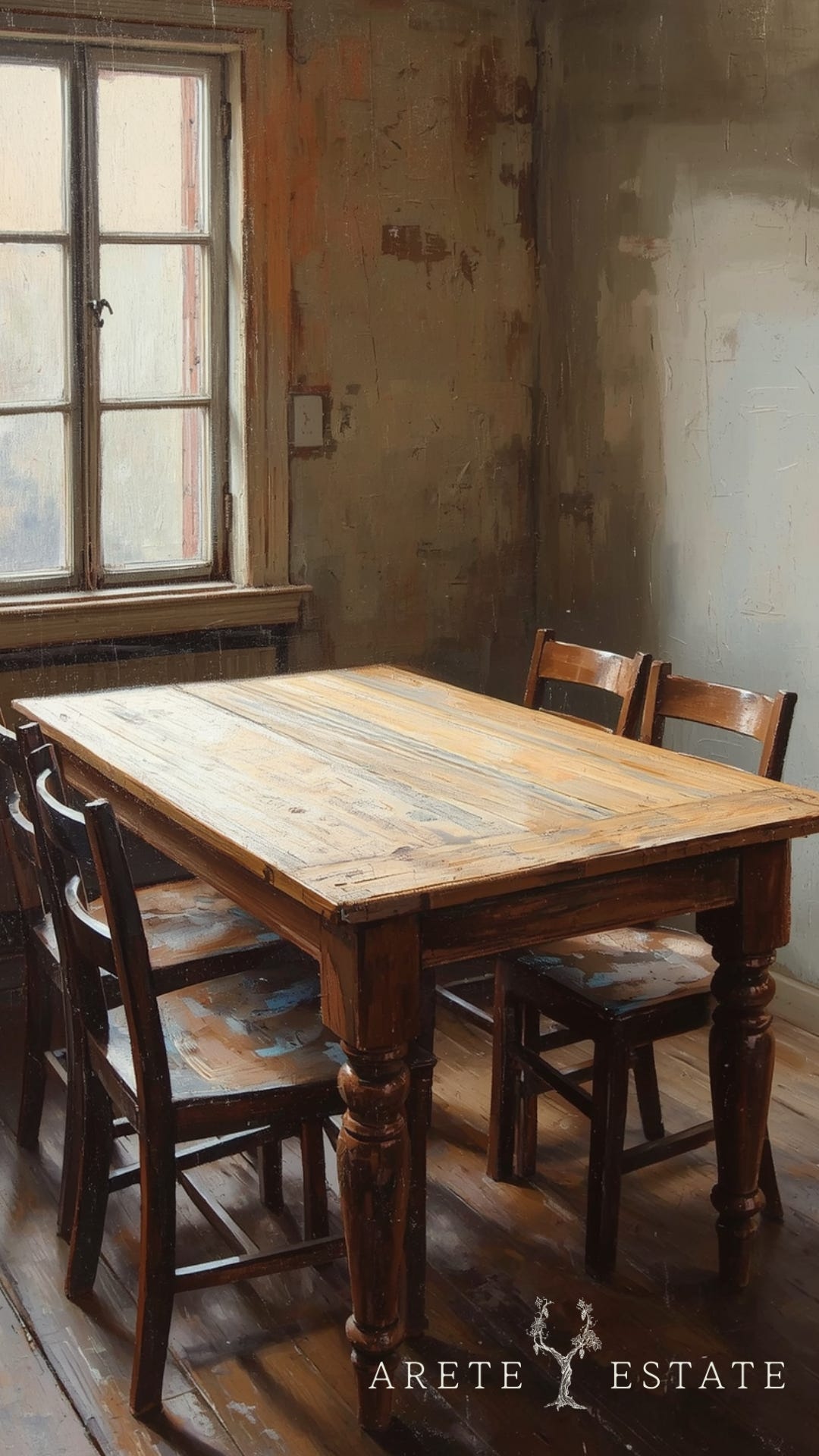
It replaced the table.
We stopped sitting down together. We stopped eating meals without a screen on the bench. We stopped having the kind of aimless, unproductive conversations where connection actually happens, the kind where nobody is optimising, nobody is performing, nobody is trying to get to the point. We let everyone drift to their own corner, their own device, their own world. And we told ourselves it was fine because they were quiet and the house was peaceful and at least nobody was fighting.
They were not fine. They were being colonised. And we were in the other room.
Now the screen is gone. And the child is looking around a room they barely recognise, at faces they have not really seen in years, and they are asking a question that should stop every one of us in our tracks:
“Okay. I’m here now. Are you?”
We cleared the room. We removed the noise. We unplugged the machine that was rewiring our children’s brains.
And then we left the room empty.
We told our children don’t look at that without telling them what to look at instead. We said put the phone down without saying sit down, let’s talk. We removed the static but never tuned in the signal.
The screen was the problem. But the empty room is the crisis.
A child standing in an empty room will scream. A child sitting at a full table will talk.
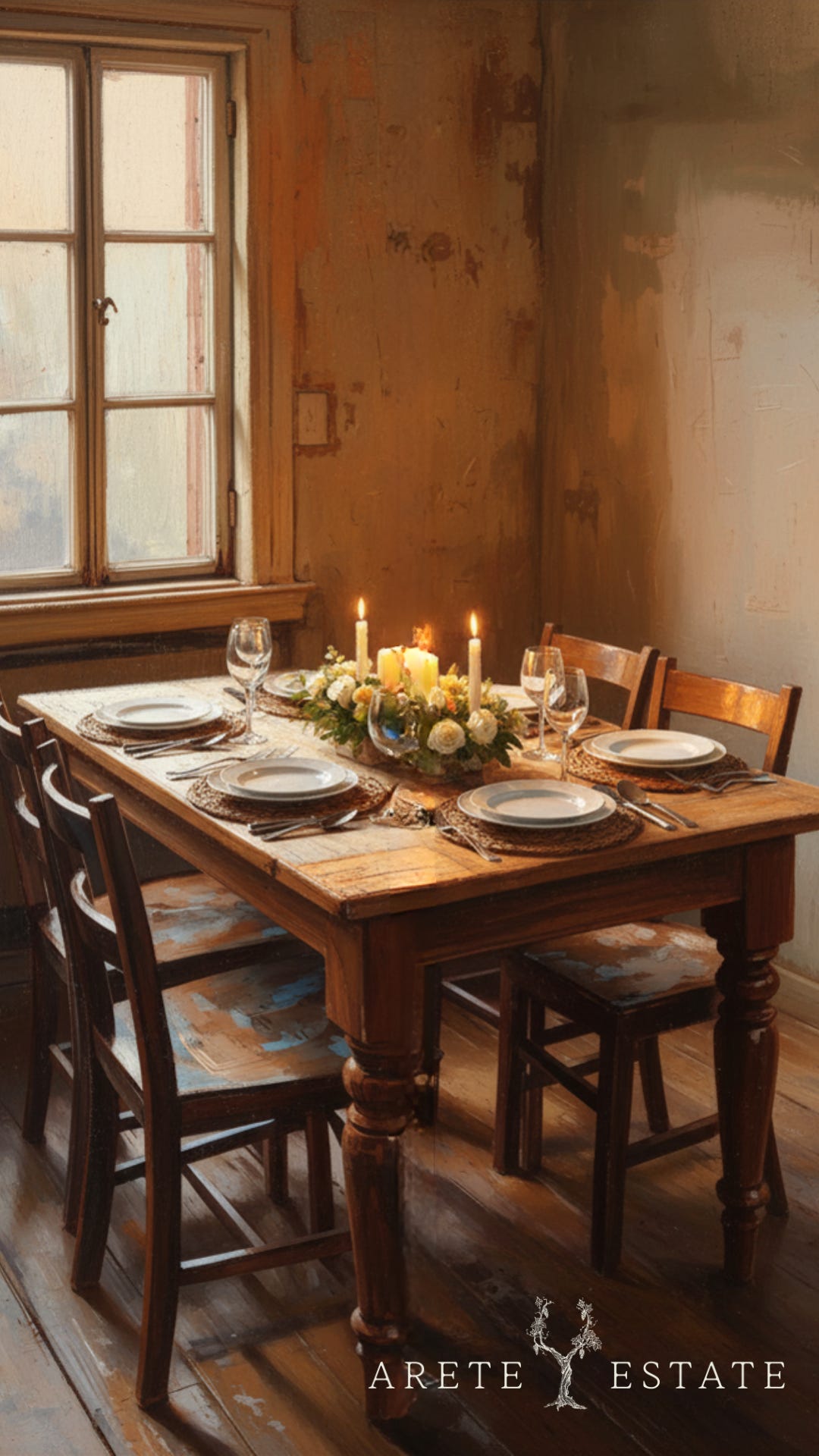
It is time to set the table.
The Mirror Before the Table
Before I tell you about the table, I need to hold up the mirror. Because if we skip this part, nothing that follows will work.
How many times did you check your phone today?
Not for work. Not for anything urgent. The other kind. The scroll-before-bed kind. The pick-it-up-because-your-hands-were-free kind. The check-the-notifications-while-your-child-was-mid-sentence kind.
The average Australian adult picks up their phone over ninety times a day. We scroll while our children talk to us. We text under the table at dinner and think they do not notice. We check the news while they are trying to show us something they built, drew, wrote, or thought, and we offer a distracted “that’s great, sweetheart” without ever lifting our eyes.
They notice. They have always noticed. And they learned from it.
They learned that screens are more interesting than people. They learned that presence is negotiable. They learned that the person in front of you can wait, but the notification cannot. We taught them this. Not with words. With behaviour. Every single day.
So when we take their screen away and say “be present,” they are well within their rights to look at us and ask: are you?
We cannot ask our children to live without a screen while we are still hiding behind ours. We cannot point at their behaviour and say this is the problem while our own phone is in our hand. We cannot demand vulnerability we are not willing to model, honesty we are not willing to practise, or presence we are not willing to give.
This is not their crisis. This is ours. And the table will not work unless we sit down at it too, not as the authority who removed the screen, but as the human being who is also learning to live without the crutch.
“Attention is the rarest and purest form of generosity.” — Simone Weil
We didn’t just give them a screen. We left the room. And the first step back in is admitting that we left.
The Table
I have been working with parents for months on this. Listening. Sitting with them in the mess of it. Hearing the same story over and over, the rage, the boredom, the guilt, the midnight silence. The basketball parents on the sideline, pulling me aside after the game, saying the same thing: something has changed at home.
And what I have built, what I believe this moment demands, is not a programme. Not a lecture. Not another set of rules about screen time.
It is a table.
A literal and metaphorical place where parents and children can sit together and do the work that the screen was preventing: the slow, messy, beautiful, unglamorous work of becoming whole people. People who know how to sit with discomfort without destroying something. How to feel bored without panicking. How to connect with another human being without a screen mediating the introduction.
The Table is a six-week framework. Two parallel guides, one for the young person, one for the parent. Each week explores one virtue, from two angles, converging on one shared conversation at the kitchen table. No devices. No agenda. Just one question.
Six questions over six weeks. And the parent goes first. Always. Because if you ask your child to be vulnerable without modelling it yourself, you are not having a conversation. You are conducting an interrogation.
Let me tell you about the virtues. Because each one answers a specific need that the screen was pretending to fill.
Fortitude — The Lighthouse
The screen taught your child to escape discomfort. Swipe away. Scroll past. Numb the feeling with the next video. Fortitude teaches them to sit in it. To stand firm when the storm is inside them. Not by being tough. By being anchored.
There is a lighthouse on a cliff somewhere. Storms hit it constantly. And every single time, the lighthouse does the same thing. It stays. It does not chase the storm. It does not run from it. It just stands where it is, and it shines.
The first thing a child needs when the screen goes dark is the capacity to tolerate discomfort without destroying something. That is not discipline. That is fortitude.
And the first thing a parent needs is the capacity to stand in their child’s storm without trying to fix it, flee from it, or take it personally. To feel the spike of adrenaline when the door slams, and to stay anyway. That is fortitude too.
The table question for this week:
“What storms are you sitting in right now that you haven’t told me about?”
Temperance — The Conductor
The screen trained your child’s brain to want everything at maximum volume, all the time. Every emotion amplified. Every impulse rewarded instantly. Temperance teaches them to conduct their inner orchestra, to turn some instruments up and others down. To understand that a life without balance is not exciting. It is chaos.
But here is the mirror: your orchestra is out of tune too. The instruments that used to make you who you are, creativity, friendships, hobbies, rest, joy, went quiet. Work, logistics, worry, and the endless administration of keeping a household running drowned them out. You did not notice because you were busy. And because the screen, yours and theirs, papered over the silence.
The table question:
“What part of your life feels out of balance — and what would balance actually look like?”
Wisdom — The Gold Pan
The screen filled your child’s head with noise. Opinions that were not theirs. Identities they tried on like costumes. A feed that told them what to think and feel before they had a chance to discover it for themselves.
Wisdom teaches them to sift. Every day is a river full of mud, stones, and gold. The mud is what hurts. The stones are what is ordinary. And the gold is what matters, a conversation that surprised you, a thought that felt like yours, a moment worth keeping.
When you start panning, actually asking yourself each evening what was mud, what was stone, what was gold, something shifts. You stop consuming your life and start noticing it. You start hearing your own voice instead of the algorithm’s.
The table question:
“What’s one thing you’ve learned about yourself recently that surprised you?”

Love — Seen
The screen gave your child a counterfeit of connection. Likes instead of listening. Comments instead of conversation. Followers instead of friends. And the counterfeit was so good that your child may not know what the real thing feels like anymore.
Love — real love, the kind that actually sustains a human life, is not a feeling. It is a practice. It is the daily, unglamorous choice to see another person fully and to allow yourself to be seen fully in return. Without a filter. Without a highlight reel. Without a persona designed for approval.
When was the last time you truly looked at your child? Not checked on them. Not supervised them. Looked at them. Noticed the way they hold their shoulders now, the new expression they make when they are thinking, the person they are becoming right in front of you while you were busy managing the logistics of their existence.
The table question — and this is the one that breaks people open:
“When was the last time you felt truly seen by me?”
The answer might be years ago. Say it anyway. Because the moment both of you acknowledge the gap is the moment the gap starts closing.
“Children need to be seen. Not evaluated. Not measured. Not compared. Seen.” — Gordon Neufeld
Courage — The Windmill
The screen protected your child from the one thing they need most: the vulnerability of being present without a filter. No avatar. No curated feed. No version of themselves designed for an audience. Just them. In the room. Unedited.
There is a windmill on a hill. It faces the wind, always the wind. Not because it is fearless, but because that is how it works. A windmill that hides from the wind is just a building. A windmill that faces it turns the very thing that could destroy it into power.
Courage is not the absence of fear. It is the decision to face it, name it, and begin anyway. Fear tells you the stakes. Courage says ‘noted’ — and begins.
The table question:
“What’s something you’ve been afraid to say to me?”
This question is not asked in Week One. It is asked in Week Five. Because by then, both parent and child have spent four weeks building the trust, the language, and the practice that makes this kind of honesty possible. The table earns this question. And when it arrives, it is a gift.
“To love at all is to be vulnerable. Love anything and your heart will be wrung and possibly broken.” — C.S. Lewis
Gratitude — The Garden
The screen trained your child to look at what they do not have. The life they are not living. The body they do not have. The friend group that looks better than theirs. Gratitude teaches them to look at what is already in front of them.
But gratitude is not toxic positivity. It is not pretending everything is fine. It is not a list of five things you are thankful for while ignoring the pain underneath. Real gratitude does not deny the mud. It grows alongside it. It is the flower next to the weed. It is the ability to hold both in the same hand and say: this is my garden, mud and all, and I am going to tend it.
Gratitude is the practice of planting what you will not harvest, and tending what you did not plant. That is parenthood. That is family. That is the life worth building.
The final table question:
“What’s something about our family that you never want to lose?”
After five weeks of naming storms, mapping imbalances, panning for gold, being seen, and saying the unsaid, this question asks both parent and child to look at their family and find the gold. Not the gold they wish existed. The gold that is already there.
“Your children are not your children. They are the sons and daughters of Life’s longing for itself. You may house their bodies but not their souls, for their souls dwell in the house of tomorrow.” — Khalil Gibran
A Word to the Young Person Reading This
If you are a teenager who has lost your phone, your apps, your feeds, your streaks, and you are angry about it, I want to talk to you directly.
I am not going to tell you it is for your own good. You have heard that. It does not help.
I am going to tell you what is actually happening.
Your brain was given something it did not ask for: a system designed to make you feel like you needed it. Every notification was a hit. Every like was a reward. Every scroll was a tiny dose of the same chemical your brain produces when you score a goal or hear your favourite song for the first time.
And now that system is gone. And your brain is screaming for it. Not because you are weak. Because the system was designed to make you dependent. You did not fail. You were engineered.
The anger you are feeling? That is not who you are. That is withdrawal. And withdrawal has an expiry date. It does not last forever. It will pass. And on the other side of it is something you may not be able to imagine right now:
Yourself.
The actual, unfiltered, unedited, un-algorithmically-curated version of who you are. The person underneath the avatar. The one who has thoughts that do not need to be posted. Feelings that do not need to be performed. A life that is happening right now, in this room, with these people, and it is more real than anything a screen ever showed you.
You are not missing out. You are coming back.
“Tell me, what is it you plan to do with your one wild and precious life?” — Mary Oliver
And the room you are standing in? It feels empty right now. But it will not always. Because somewhere in your house, right now, there is a parent reading this same essay. And they are not reading a manual on how to fix you. They are reading a mirror. They are looking at their own phone, their own absence, their own part in this story. And they are deciding to walk back into the room.
There is a seat at the table with your name on it. You do not have to sit down tonight. But it will be there when you are ready.
The Signal and the Static
Social media was static. Noise that felt like signal. A thousand voices, none of them yours, all of them competing for the same three inches of screen.
When you remove the static, there is a moment of silence that feels like loss. But it is not loss. It is space. Space for the real signal to come through.
The signal is not louder than the static. It is quieter. It is the sound of your own thoughts when nobody is feeding you content. The feeling of being bored and discovering that boredom is not dangerous, it is the doorway to creativity, imagination, and the kind of self-knowledge that no app can deliver.
The signal is the conversation at dinner that goes somewhere unexpected because nobody is checking their phone under the table. The walk that becomes a real talk because there is no earphone wall between you. The evening that stretches and bends and becomes something unplanned because there is no algorithm deciding what comes next.
The signal has always been there. Your family has always been there. The room was never really empty.
It was just too noisy to hear.
If you are a parent reading this at midnight, lying in bed, wondering if you did the right thing, you did. The screen needed to go. But the work does not end with removal. It begins there. The table needs to be set. And you are the one who sets it. Not with lectures. Not with rules pinned to the fridge. With presence. With patience. With the willingness to go first.
If you are a teacher watching this happen in your classroom, the restlessness, the short fuses, the kids who do not know what to do with their hands — you are not imagining it. And you are not powerless. Every conversation you have with a student that does not involve a screen is a brick in the new architecture.
If you are a young person who is angry and lost and standing in a room that feels empty, it will not feel this way forever. The withdrawal will pass. And what is on the other side of it is worth more than anything the screen ever gave you.
It is you. The real you. Unfiltered. Unedited. Present.
And it is us. The real us. Sitting at the same table. Looking at each other for the first time in years. Saying the things we should have said a long time ago.
“Almost everything will work again if you unplug it for a few minutes. Including you.” — Anne Lamott
We didn’t just give them a screen. We left the room. The Table is how we walk back in.
The room is not empty. You just need to set the table.
Sit down. Stay.
The signal is coming through.
The Table Is Set
If this essay found you at the right momen, if you are the parent lying awake, the teacher watching it unfold, or the young person standing in the room, I want you to know: you are not alone in this. And there is a path forward.
I have built a complete framework for families navigating this transition, a six-week guided journey with two parallel guides: My Signal for young people, The Invitation for parents. Six virtues. Six honest conversations. One table.
DM me ‘Lighthouse’ on Instagram (@areteestate) for the free overview guide. Or reach me at marcus@areteestate.com.au.
Subscribe to The Arete Path for weekly essays on virtue, character, and the life worth building.
Share this piece with a parent who is in the middle of this right now. They need to know the silence is not the end. It is the beginning.
Website coming soon. - areteestate.com.au
The door is open. The table is set. Come sit down.

• • •
Marcus J Emsley is the founder of Arete Estate and the author of Wisdom & Wine. He writes from the Barossa Valley, South Australia, where excellence is revealed — not constructed — by the storms that shape us. Marcus spent 17 years as a welfare specialist in the Australian Defence Force and now builds frameworks for character formation across schools, families, and communities. Follow The Arete Path on Substack for weekly essays on virtue, character, and the life worth building.